
7 Timber Buying Mistakes
Primary Keyword: 7 Mistakes to Avoid When Buying Timber
Secondary Keywords: Timber Buying Guide, Buy Timber in Delhi, Timber Supplier in Delhi, Best Timber Dealer, Quality Timber, Teak Wood Supplier, Timber Trading, Timber for Furniture, Balaji Wood Mart
7 Mistakes to Avoid When Buying Timber
When I started understanding the timber industry, I realized that 7 mistakes to avoid when buying timber can save homeowners, contractors, architects, and furniture manufacturers from expensive losses. Choosing timber is not only about selecting a wooden plank that looks attractive. It is about durability, moisture content, wood species, strength, finish, and long-term value.
I have seen many buyers spend thousands of rupees on timber only to face issues like bending, termite attacks, cracks, or poor furniture quality within a few months. That is why I always recommend understanding these common mistakes before making any purchase.
In this guide, I will share the 7 mistakes to avoid when buying timber so you can make a confident buying decision and invest in wood that lasts for years.
Why Choosing the Right Timber Matters
Buying timber is a long-term investment. Whether I am selecting wood for furniture, doors, windows, modular kitchens, wardrobes, flooring, or commercial interiors, the quality of timber directly affects durability and appearance.
Good timber offers:
Better strength
Longer lifespan
Higher resistance to termites
Better finishing
Less maintenance
Improved value for money
Avoiding the 7 mistakes to avoid when buying timber can help me save repair costs and ensure that every project stands the test of time.
Mistake 1: Buying Timber Only Because It Is Cheap
One of the biggest mistakes I see is selecting timber based only on price.
Low-priced timber may look attractive initially, but it often comes with hidden problems such as:
High moisture
Poor seasoning
Lower strength
Faster decay
Inferior quality
Instead of asking, “What is the cheapest timber?” I always ask, “Which timber offers the best long-term value?”
Quality timber may cost slightly more today but saves significant repair and replacement costs in the future.
Mistake 2: Ignoring Moisture Content
Among the 7 mistakes to avoid when buying timber, ignoring moisture content is one of the most expensive.
Fresh timber contains water. If it is not properly seasoned before use, problems can develop later, including:
Cracks
Warping
Shrinking
Twisting
Loose joints
I always prefer properly seasoned timber because it remains more stable after installation.
Professional timber suppliers always ensure proper seasoning before selling timber.
Mistake 3: Choosing the Wrong Wood Species
Every timber species serves a different purpose.
For example:
Teak wood is ideal for premium furniture.
Hardwood works well for heavy-duty applications.
Decorative wood suits interior designs.
Structural timber is suitable for construction.
I never assume that every wood type performs the same.
Understanding the application before purchasing helps me choose the right timber for durability and performance.
Mistake 4: Not Checking for Defects
Before buying timber, I carefully inspect every piece.
Common defects include:
Knots
Surface cracks
Splits
Insect holes
Fungal stains
Warping
Even beautiful-looking timber can hide internal defects.
A reliable timber supplier always allows proper inspection before purchase.
Checking quality carefully is one of the smartest ways to avoid the 7 mistakes to avoid when buying timber.
Mistake 5: Buying from an Unverified Timber Supplier
The supplier matters just as much as the timber.
I always choose an experienced timber trader because they offer:
Genuine guidance
Proper grading
Consistent quality
Honest pricing
Better customer support
Experienced suppliers understand wood characteristics and recommend the right timber according to the project.
At Balaji Wood Mart, I believe buyers deserve complete transparency before making any purchase.
Mistake 6: Forgetting About Future Maintenance
Many buyers only think about installation costs.
I always consider long-term maintenance before selecting timber.
Questions I ask include:
Does this timber require frequent polishing?
Is it termite resistant?
Can it handle moisture?
Is it suitable for Delhi’s weather?
Will it maintain its finish over time?
Thinking ahead helps me reduce future maintenance expenses.
Mistake 7: Not Asking Enough Questions
The final point in the 7 mistakes to avoid when buying timber is surprisingly common.
Many buyers hesitate to ask questions.
Before purchasing timber, I always ask:
Which wood species is best?
Is the timber seasoned?
What is the moisture level?
Is it suitable for furniture?
Does it come from a reliable source?
What maintenance will it require?
A knowledgeable supplier should answer every question confidently.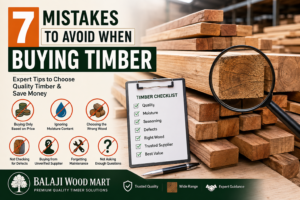
How I Choose Quality Timber
Whenever I purchase timber, I follow a simple checklist:
Check seasoning quality
Verify moisture content
Inspect for defects
Compare wood species
Understand intended use
Buy from trusted timber dealers
Ask detailed questions
Avoid making decisions based only on price
This process helps me purchase durable timber every time.
Why Buyers Trust Balaji Wood Mart
At Balaji Wood Mart, I focus on supplying premium-quality timber that meets professional standards.
I understand that every customer has different project requirements. Whether the requirement is residential furniture, office interiors, doors, windows, or commercial projects, I believe that quality should never be compromised.
I guide customers in selecting the right timber based on durability, application, and budget so they can make informed decisions with confidence.
Final Thoughts
Understanding these 7 mistakes to avoid when buying timber has helped me make smarter purchasing decisions and avoid unnecessary expenses. Timber is a long-term investment, and choosing the right wood today can save years of maintenance and replacement costs.
Whenever I buy timber, I focus on quality, proper seasoning, trusted suppliers, and the right wood species instead of simply choosing the lowest price.
If I invest a little more time before purchasing, I enjoy stronger, longer-lasting, and more beautiful results.
Which of these timber buying mistakes have you experienced, and what is the biggest challenge you face when choosing timber for your next project?
Frequently Asked Questions (FAQs)
1. What is the biggest mistake people make when buying timber?
The biggest mistake is buying timber based only on price without checking quality, seasoning, and moisture content.
2. How can I identify good-quality timber?
I inspect moisture content, look for defects, verify seasoning, and purchase only from trusted timber suppliers.
3. Which timber is best for furniture?
Teak wood is one of the best choices for premium furniture because of its durability, natural strength, and attractive appearance.
4. Why is seasoned timber important?
Seasoned timber has lower moisture content, making it less likely to shrink, crack, bend, or warp after installation.
5. Why should I buy timber from a trusted supplier?
A trusted supplier provides genuine quality, expert guidance, proper grading, and consistent products, helping me avoid costly mistakes and ensuring long-lasting performance.